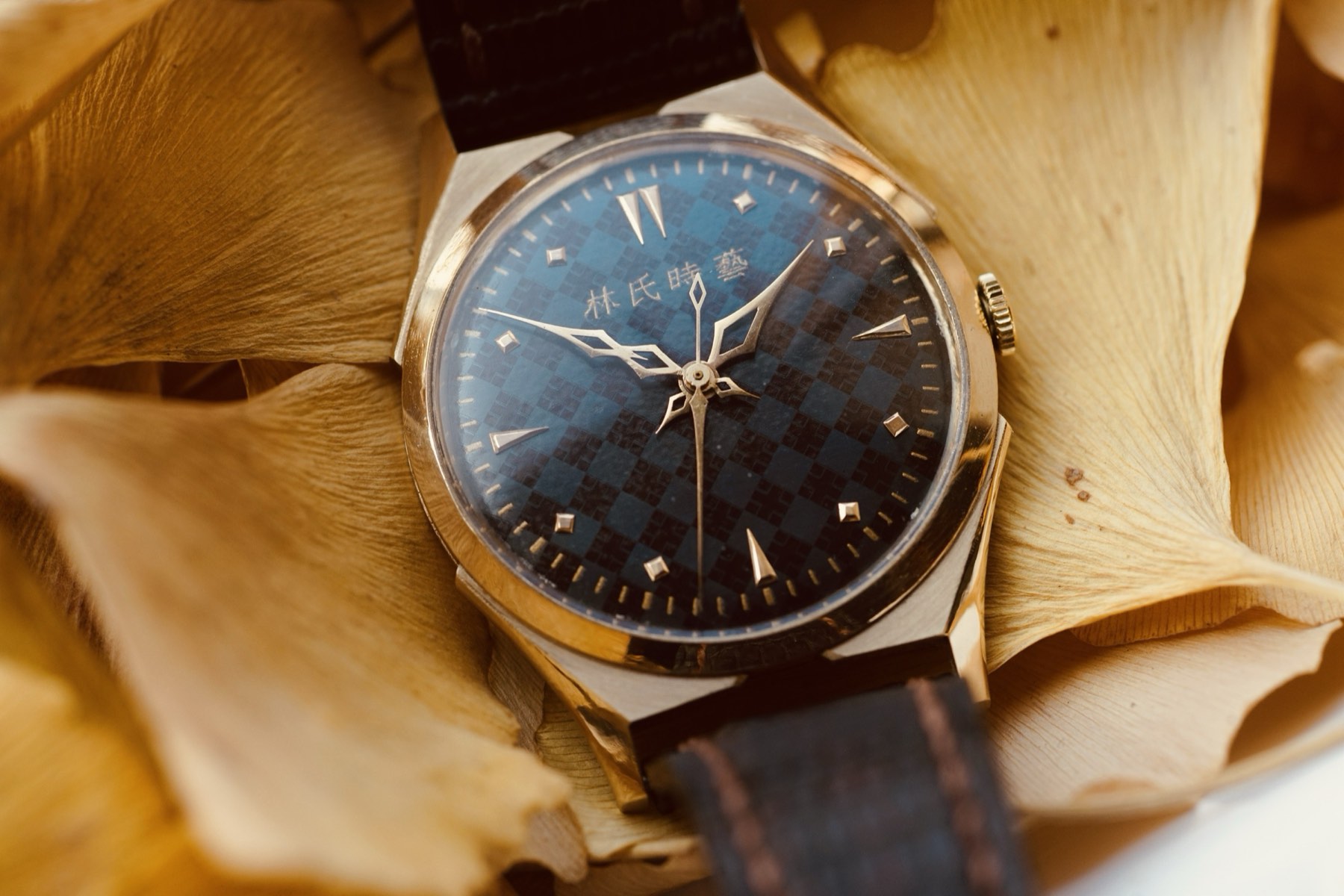
Independent watchmaking / three-handerFinal product documented

Independent watchmaking / three-hander dress watch build

Three-Hander.

林氏创艺十周年纪念

The Three-Hander photographed as the project's frontpage image
Cover / Plate IEngraved inside the officer case back.

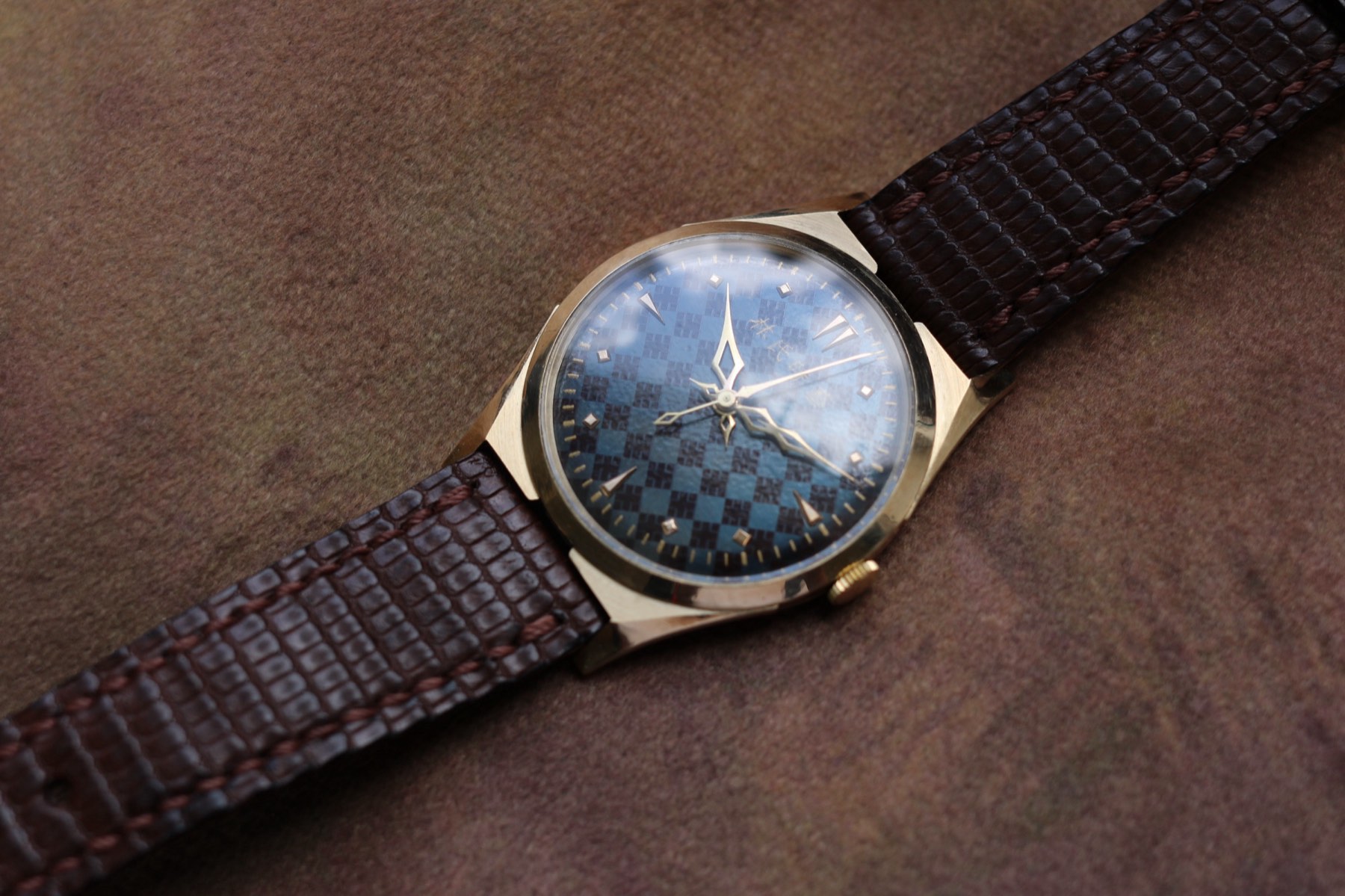
Thirty-three millimeters across, under seven millimeters in height: a slim three-hander built with Guo Hao around a vintage IWC caliber 403, for LinsCraft’s tenth year.

Movement / IWC vintage caliber 403Case / 33 mm, under 7 mmWatchmaker / Guo Hao 郭昊

02–03

The case

A line drawn in air.

A year after Guo Hao and I completed the Tilted Watch, I came across a photograph of a 1960s Vacheron Constantin Royal Chronometer. It was not the name that arrested me, but the case—an attenuated, architectural thing, so disciplined in profile that it looked less like metal than like a line drawn in air and then hardened.

I brought the image to Mr Guo. “We should make our own.”

He studied it for a long time before answering. “Under seven millimeters,” he said at last. “A case that thin has no forgiveness.”

I had already done the arithmetic. Thirty-three millimeters across, no more than forty-two and a half from lug to lug, and under seven millimeters in height—slender enough to disappear beneath a cuff, yet substantial enough to register on the wrist.
04–05

The tenth year

An object you could wear.

That was the year LinsCraft turned ten. A decade of building worlds with Microsoft—Minecraft among them, those blocky landscapes we had shaped and then watched other people inhabit. I wanted the anniversary to become an object you could wear, something small enough to close in one hand and heavy enough to remember.

06–07

Dial, glass, and back

It doubles the dial.

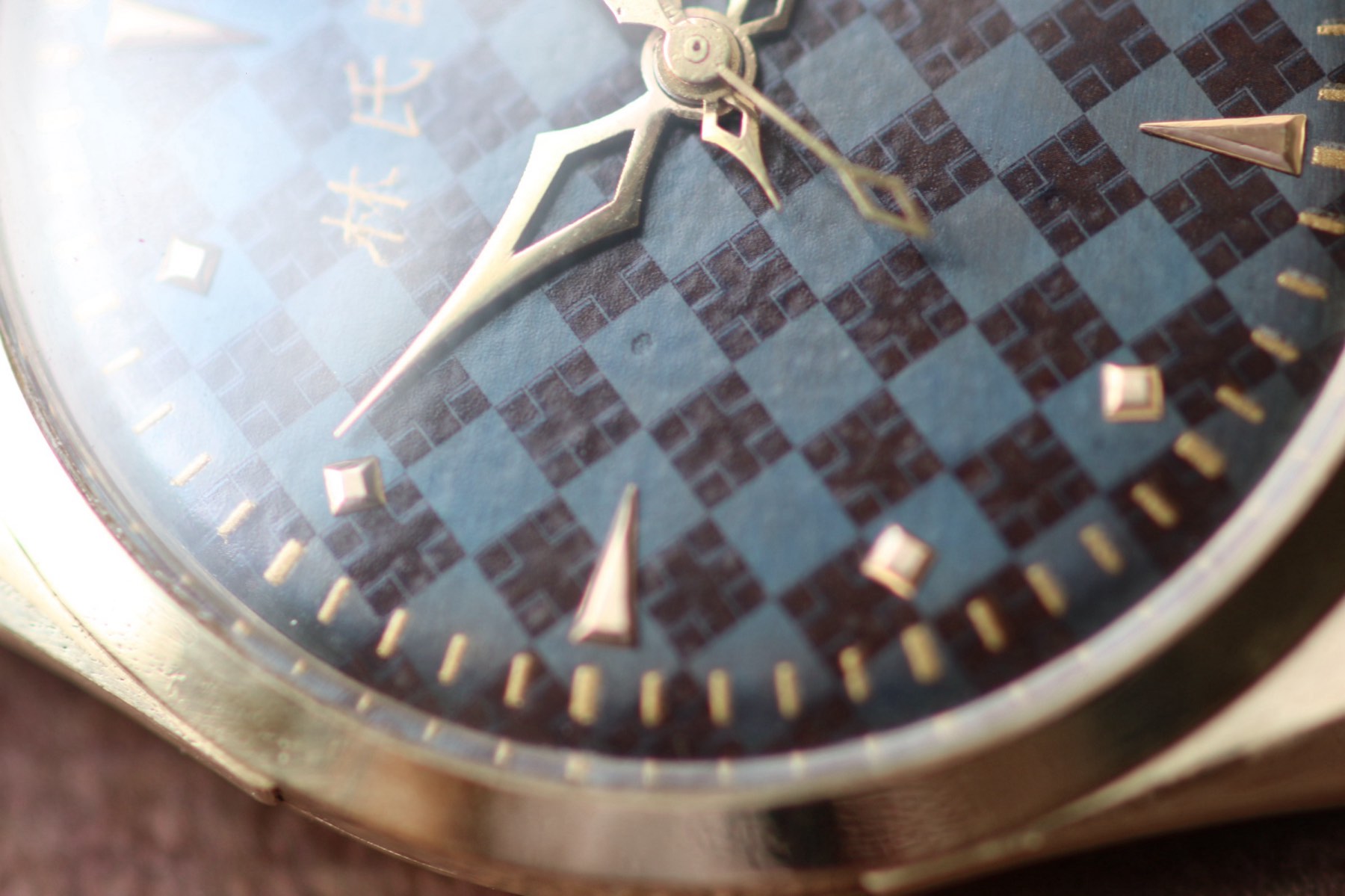
I had been sketching unusual hands since the beginning—long, narrow forms that belonged to no existing watch—and I brought those drawings out again. For the dial we chose a deep blue, engine-turned with a square-within-square pattern, nested squares that shifted with the light like water arrested in steps.

For the crystal, Mr Guo was particular. He wanted a vintage pocket-watch glass, not the sterile clarity of modern sapphire, but something with a faint blue bloom to it. “Look through it,” he said. “The glass throws the blue back into your eyes. It doubles the dial.” I had thought the color alone would be enough. He understood that the crystal itself could become a lens for it.

At the back we used an officer case back: a hinged lid rather than a plain display window. Inside, we engraved 林氏创艺十周年纪念.

Fold-out / the sheets

Laid on the desk.

The sheets record the case, dial, and proportions before any metal was cut: thirty-three millimeters across, under seven millimeters in height.

The sheets / 09

Dark insert / work in progress

A small city of levers.

The movement was a small, prolonged argument. I laid out the IWC calibers—401, 402, 403, C88, C89—each a small city of levers and jewels. Mr Guo kept returning to the 403. It was thin enough to preserve the case’s proportions, and its balance was adjusted by an index rather than by screws. The C88 and C89, for all their appeal, carried screwed balances and too much thickness. IWC also offered something less romantic but necessary: finishing stability, production scale, and the promise that parts would still exist when the watch returned for service.

For the applied indices—the small tooth-like markers—I had wanted eighteen-karat gold. Mr Guo shook his head. “Nine karat,” he said. “Eighteen is finer, but fineness does not survive daily wear. Nine will keep its shape and still catch the light.” We used nine-karat gold for the indices, the hands, and the casework.

Servicing / the movement / 06

12–13

The first case

The metal confessed.

The first case arrived with a flaw I could not immediately name. The lugs caught the light at an odd angle, the surface bending as if trying to turn a corner that did not exist. I blamed the CAD, then the model. Then one afternoon I held a lug tip to the light and saw it plainly: the tip was square, where it should have been tapered—drawn inward like a wedge so the side plane could fall cleanly. The square had forced the metal into a false, twisted geometry.

By then I had already decided the case was wrong. Mr Guo had seen it too, and we had begun redrawing the lugs. But the watch was still whole, still on my wrist, and I kept telling myself there was time. Rebuilding it would mean admitting the first version had never been right.

Then, during a strap change, the case cracked. Not from violence, not from clumsiness, but from the very thinness we had demanded. The sound was small, almost apologetic—as though the metal had finally confessed what we already knew.

Mr Guo received the broken case without reproach. He turned it slowly in his hand and said, “Now we rebuild it the way it should have been from the outset.”

Gatefold / the rebuild

The watch for our tenth year.

The final case came back with the lug tips tapered to a wedge and the roots subtly reinforced. It sat on the wrist differently now. The side plane fell cleanly, the way it should have from the beginning. The vintage crystal threw its faint blue back over the dial, so the whole watch seemed to hold light rather than merely reflect it. It looked like a watch again—balanced between the blue dial and the hinged back, between the thinness I had wanted and the strength it had always needed.

That was the watch for our tenth year. Not a monument. Just a discreet, wearable object with a hidden door and a borrowed glass that remembered pocket watches, and a lesson in geometry I still think about whenever I change a strap in a quiet room.

LinsCraft tenth anniversary

林氏创艺十周年纪念. An album of the Three-Hander.

Back to Horlogerie indépendante