A pocket watch
of my own.
LIN01 begins with the ETA 6497-1, a familiar starting point in a watchmaking student’s education. I want to return to that first encounter with the pocket watch and carry it forward in the spirit of independent watchmaking: learning through making, and giving a familiar mechanism a personal expression.
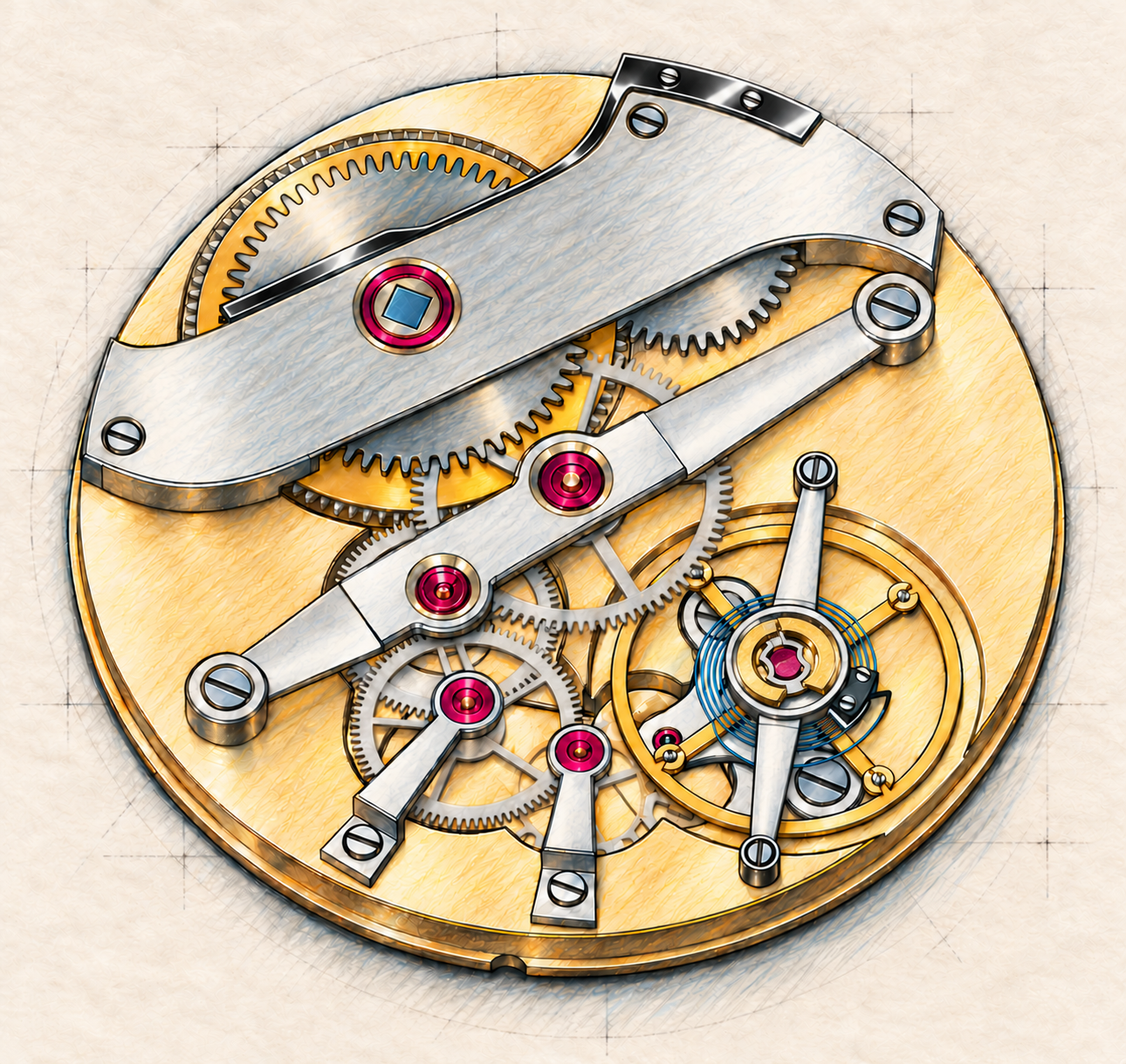
The 6497-1 wheel train is my foundation. Around it, I want to develop my own bridges and plates, explore the form and finish of the wheels, and give the movement an identity of its own. Each decision, from the shape of a bridge to the way a surface catches the light, should express the watch I want to make.
My ambition reaches beyond the movement: to develop a conceptual design for a complete pocket watch, with a world-time display, a case and a dial that belong together. This page records how the concept has taken shape, from the movement outward.
From movement
to pocket watch.
Each part of LIN01 has been developed in conversation with the others: the movement sets the foundation, while the case, dial and hands give the watch its own presence.
A familiar foundation,
a personal architecture.
Beginning with the ETA 6497-1 wheel train, I explored a new arrangement of bridges and plates, studying their shape, finish and relationship to the wheels and jewels. The colour study shows the movement architecture and its intended finishes.
The retained movement design became the basis for a world-time module, bringing a second layer of mechanical interest to the pocket watch.
Making room
for the whole watch.
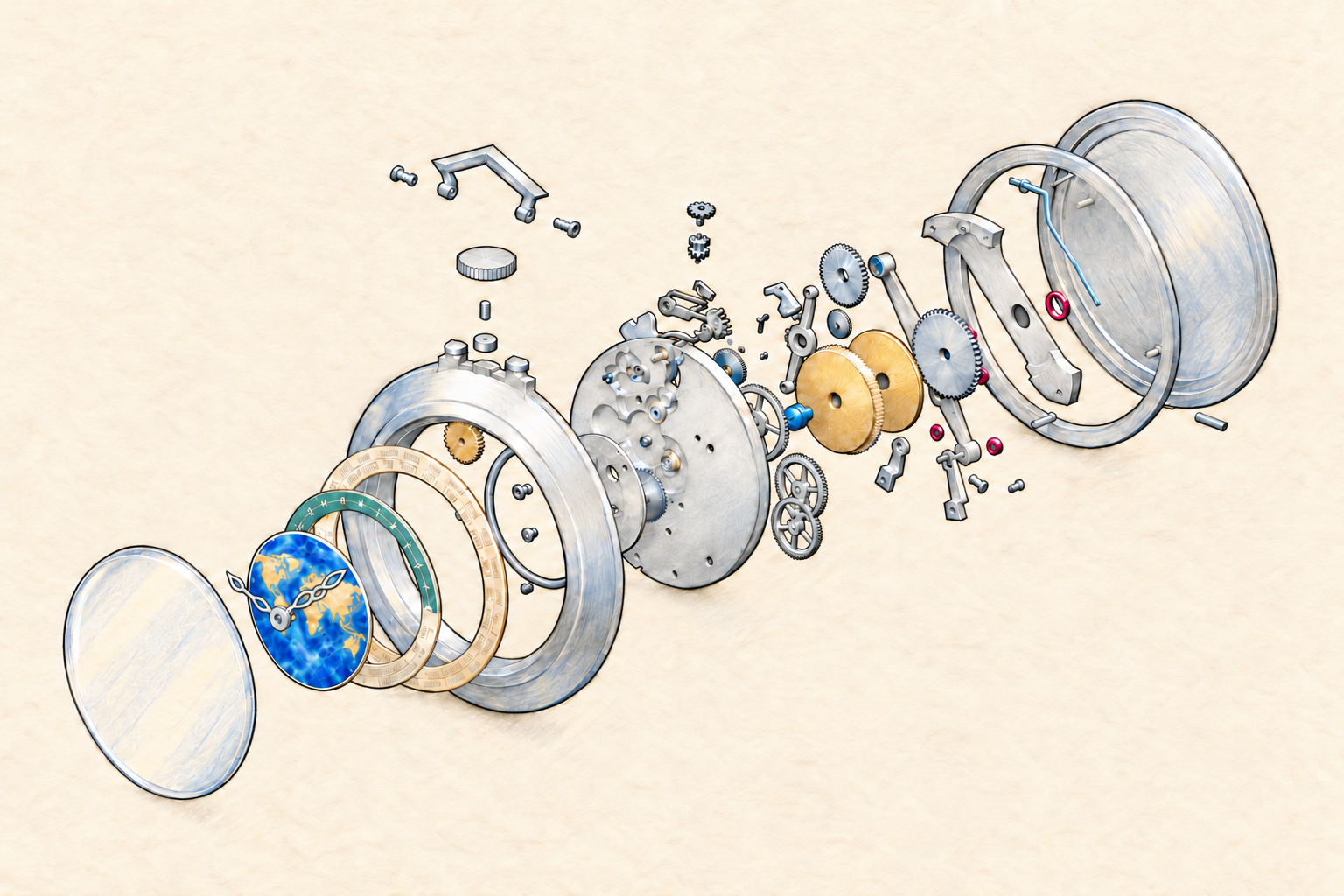
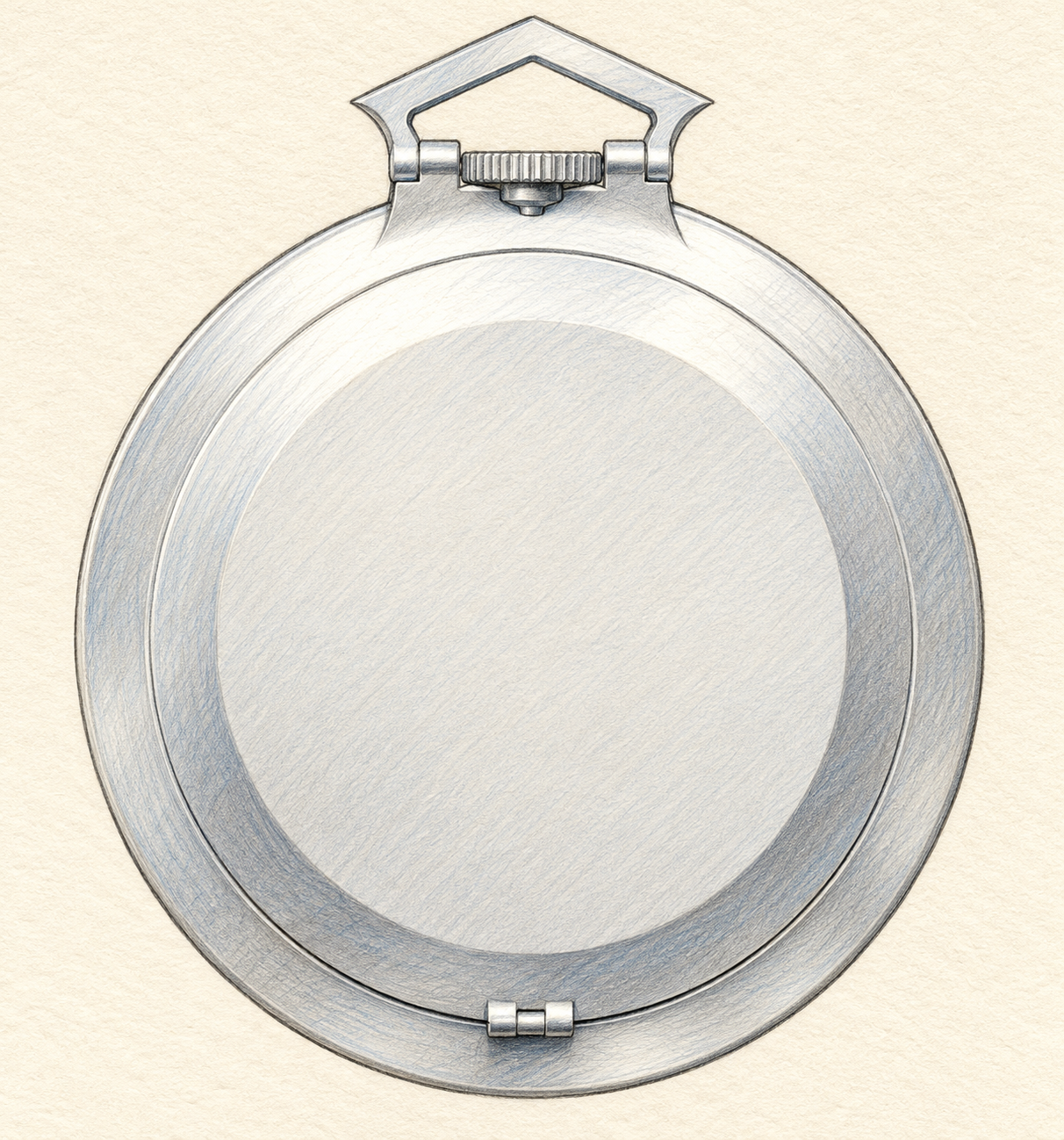
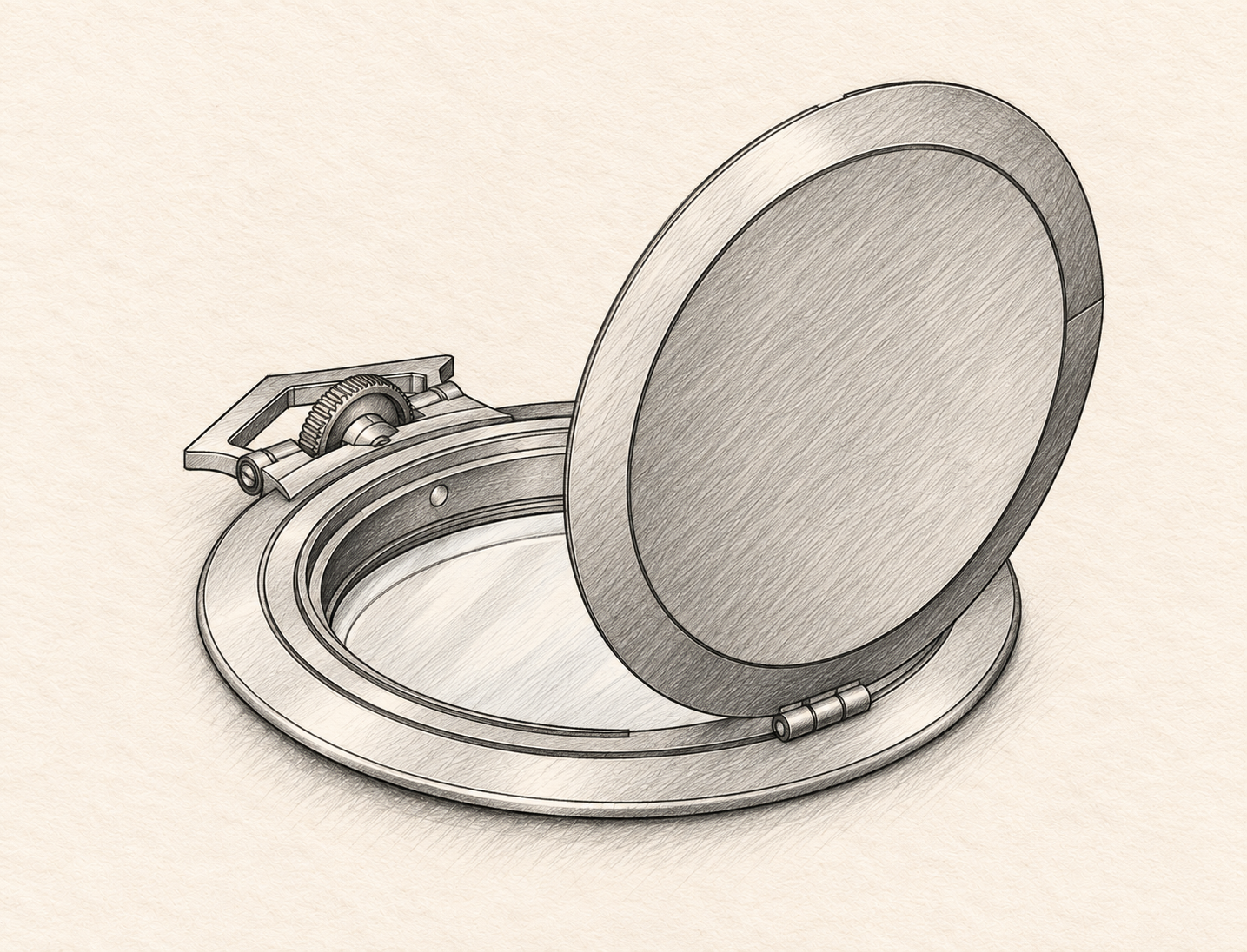
I adapted a hunter-style pocket-watch case to the movement, developing the proportions, domed crystal, crown, bow and hinged back through successive studies. The assembly brings the movement and world-time display into a case designed around them.

A world on the dial.
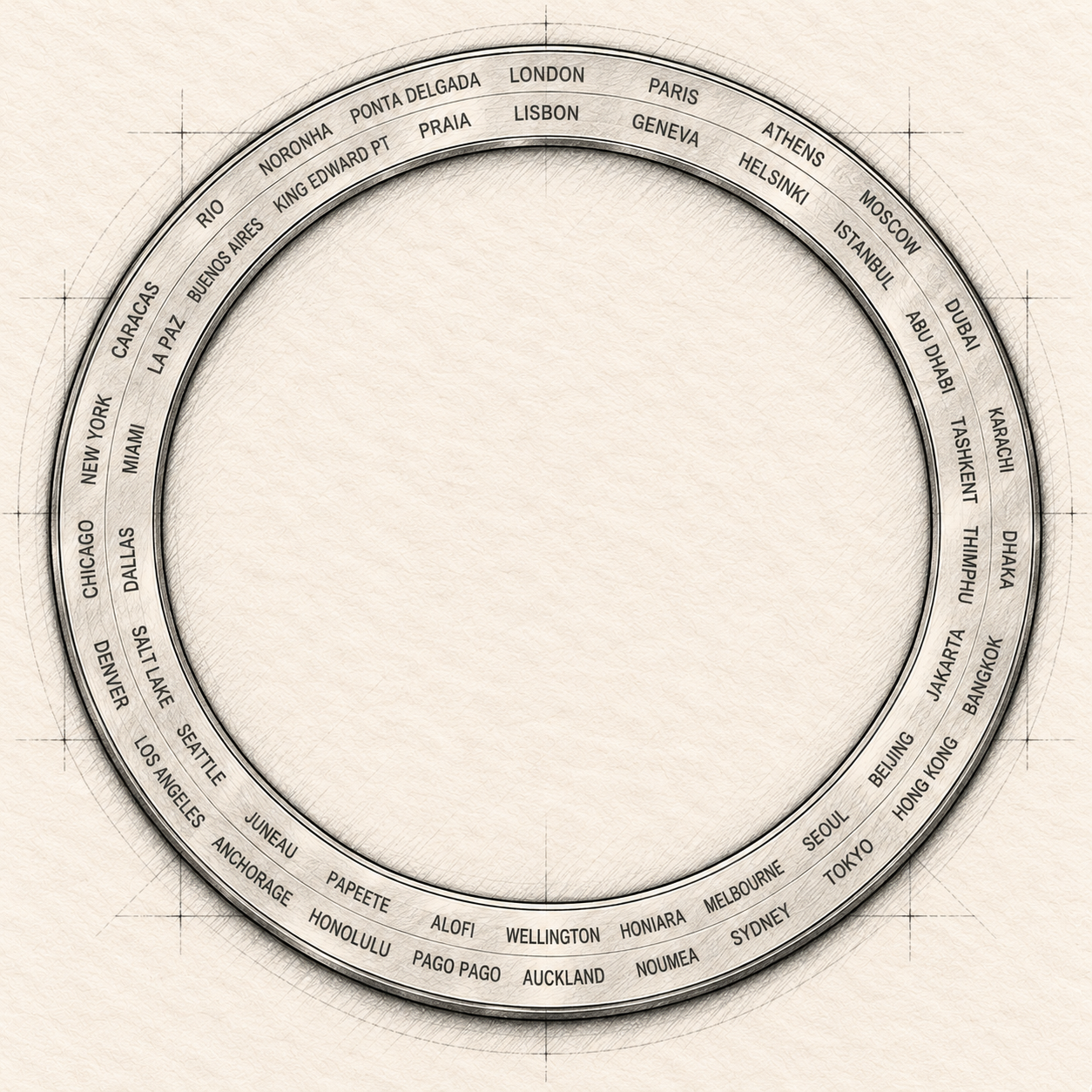
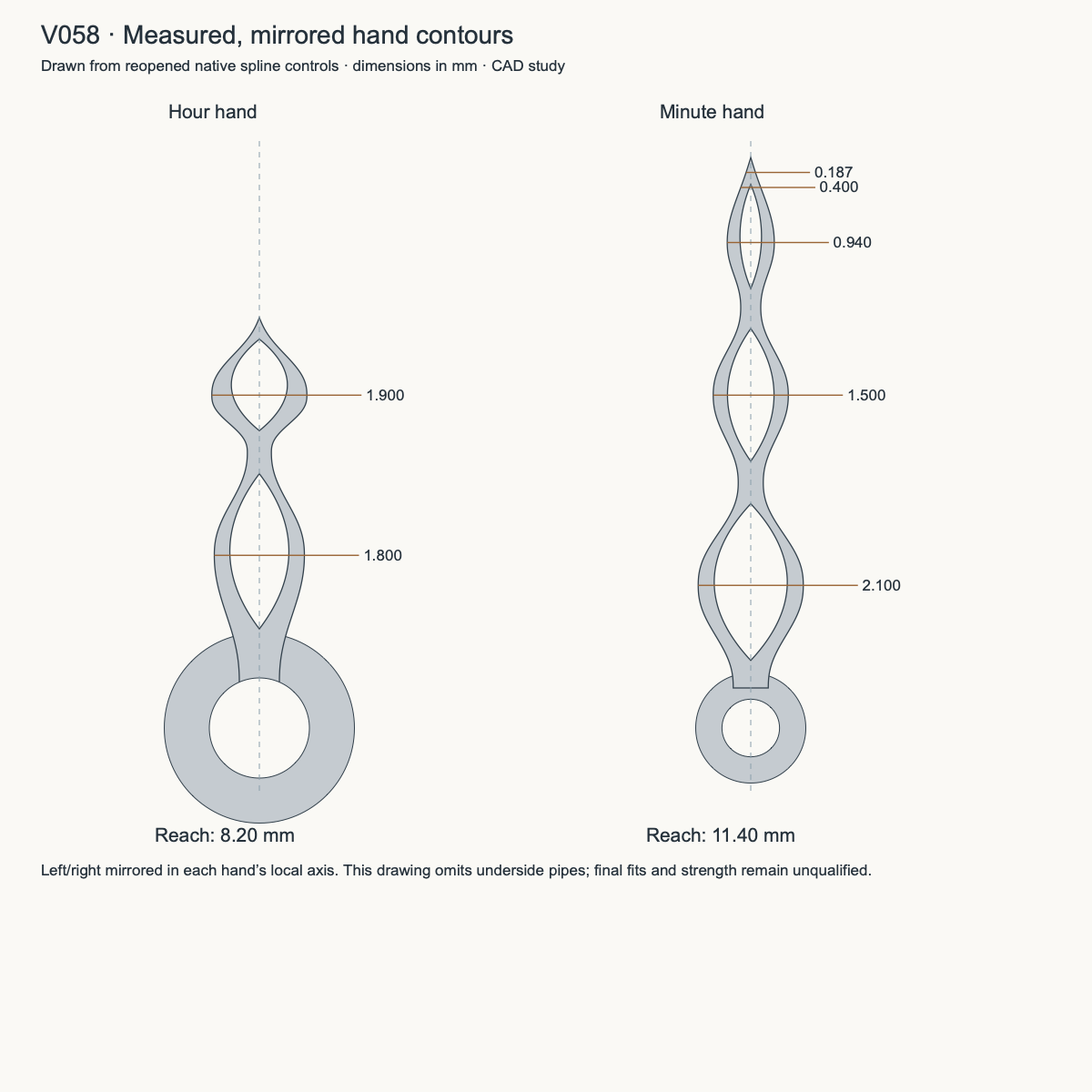
The dial brings together a central enamel map, a recessed 24-hour ring and a surrounding city disc. I refined the layout so the city names stand without dividing lines and face the centre of the dial. For the latest concept, I developed silver openwork hands: a curved hour hand with a teardrop tip and a tapered minute hand with three leaf-shaped openings.
The illustrated study below shows the dial artwork with the selected hand direction. In the latest construction, the 24-hour ring extends beneath its neighbours to conceal the visible slots while keeping the pieces separate.
The case from
the other side.
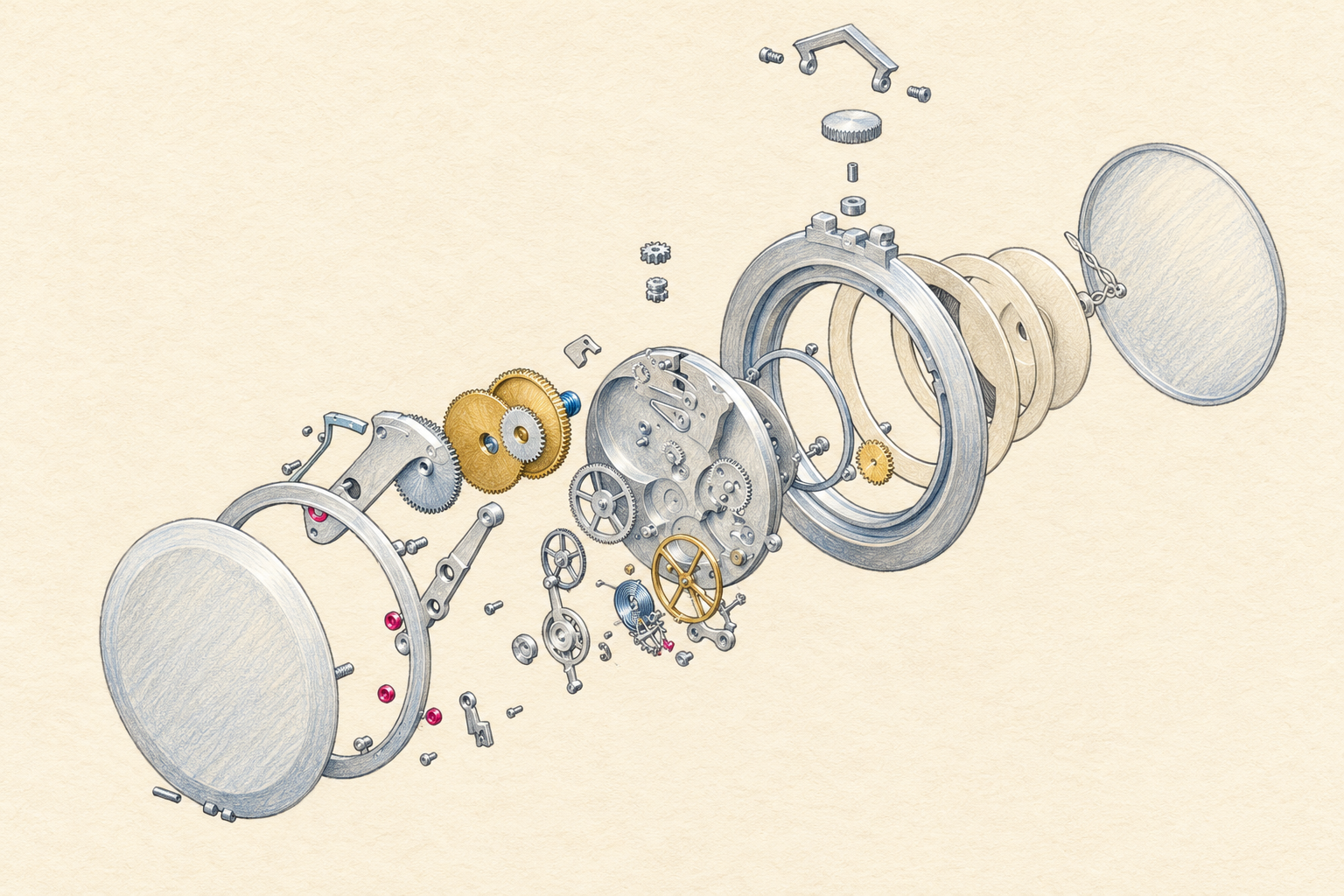
The reverse view shows the hinged back and the movement side of the pocket watch. The exploded study separates the parts to show how the case and movement come together.
Work in progress,
in pictures.
A closer look at the decisions behind the current concept. Each checkpoint follows the shape of a component and the problem I was working through.
A second layer above the movement.
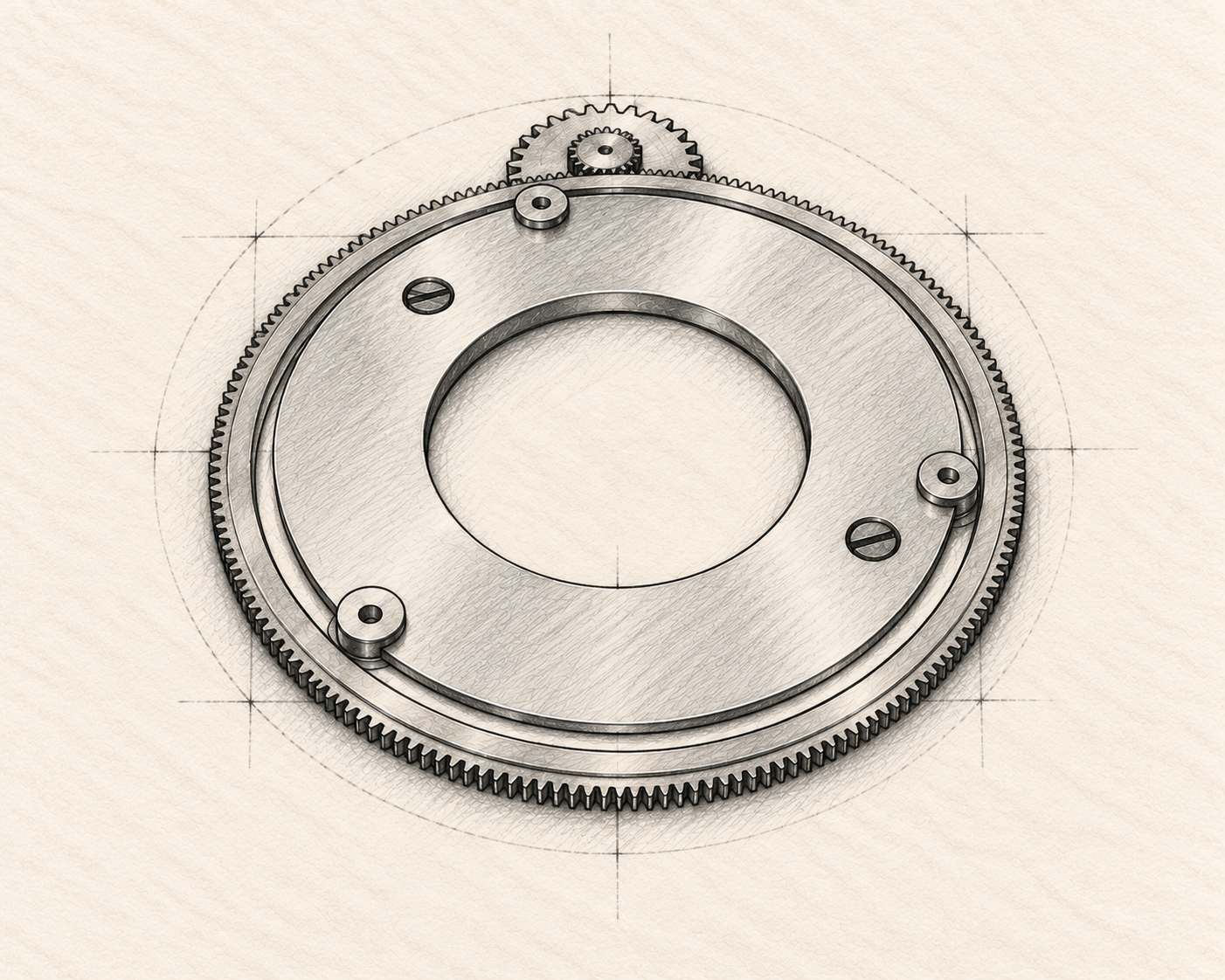
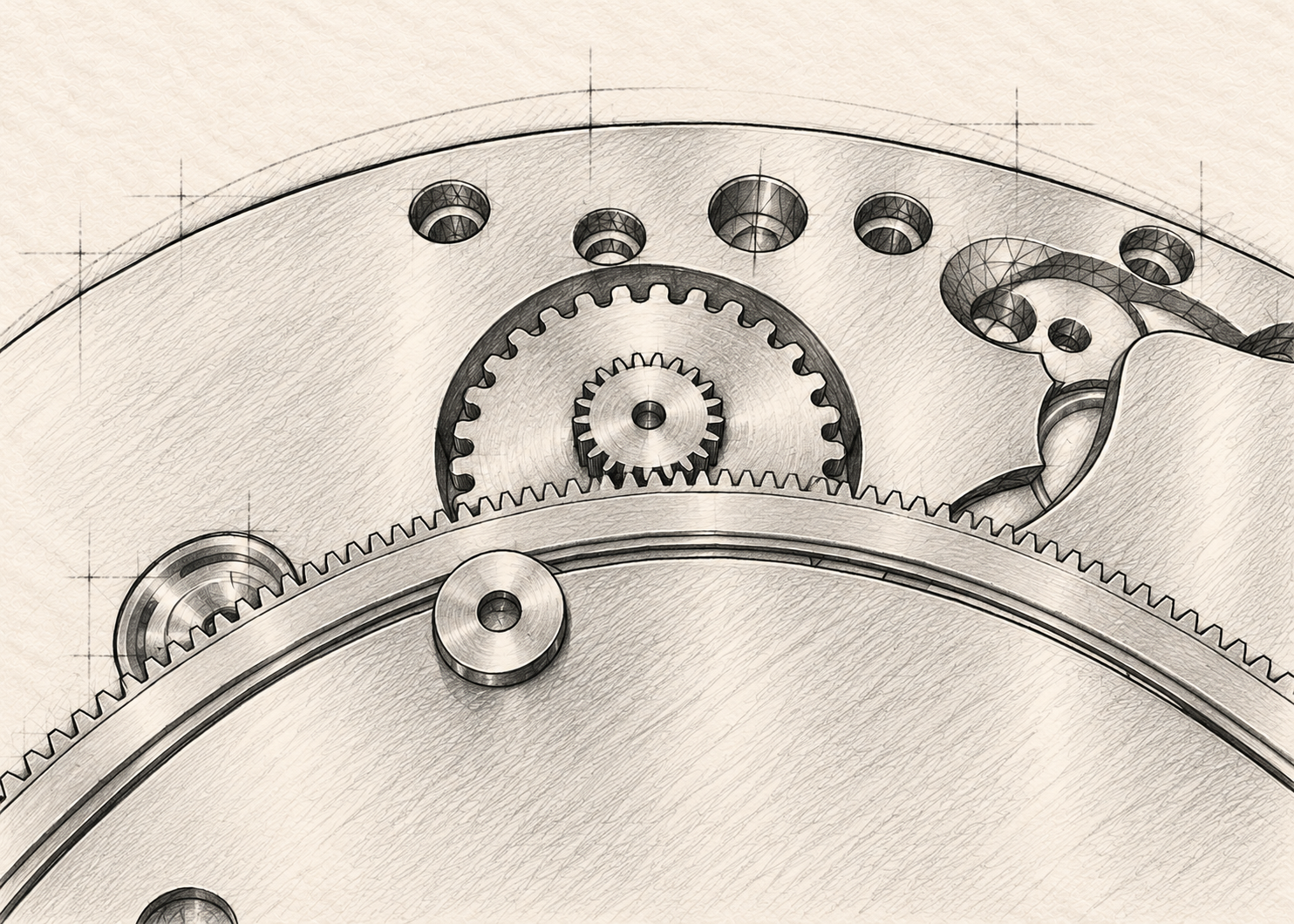
The world-time work developed a separate module around the 6497 foundation. The V008 study installed the full-body steel pinion in the assembled mechanism, with its toothed body extending down to the brass wheel. Removing the earlier narrow waist gave the pinion the fuller profile selected during the review.
The 21-tooth pinion retained its upper working profile and the two-screw module mounting. The construction studies considered tooth cutting, seating the brass wheel and forming the retaining lip. Bearing clearances, axial restraint, runout and the joining process still require workshop development.
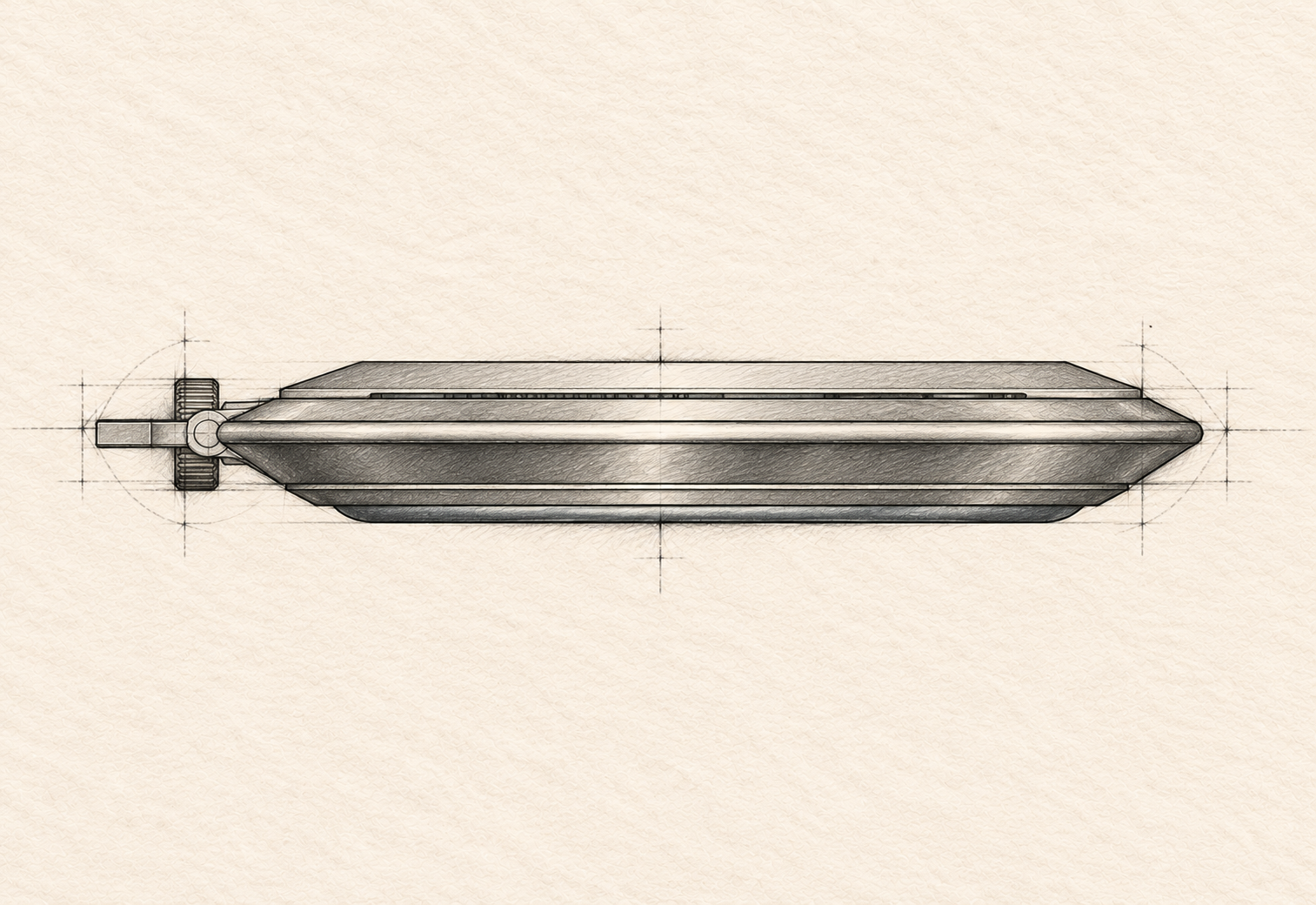
Lower metal, space inside the crystal.
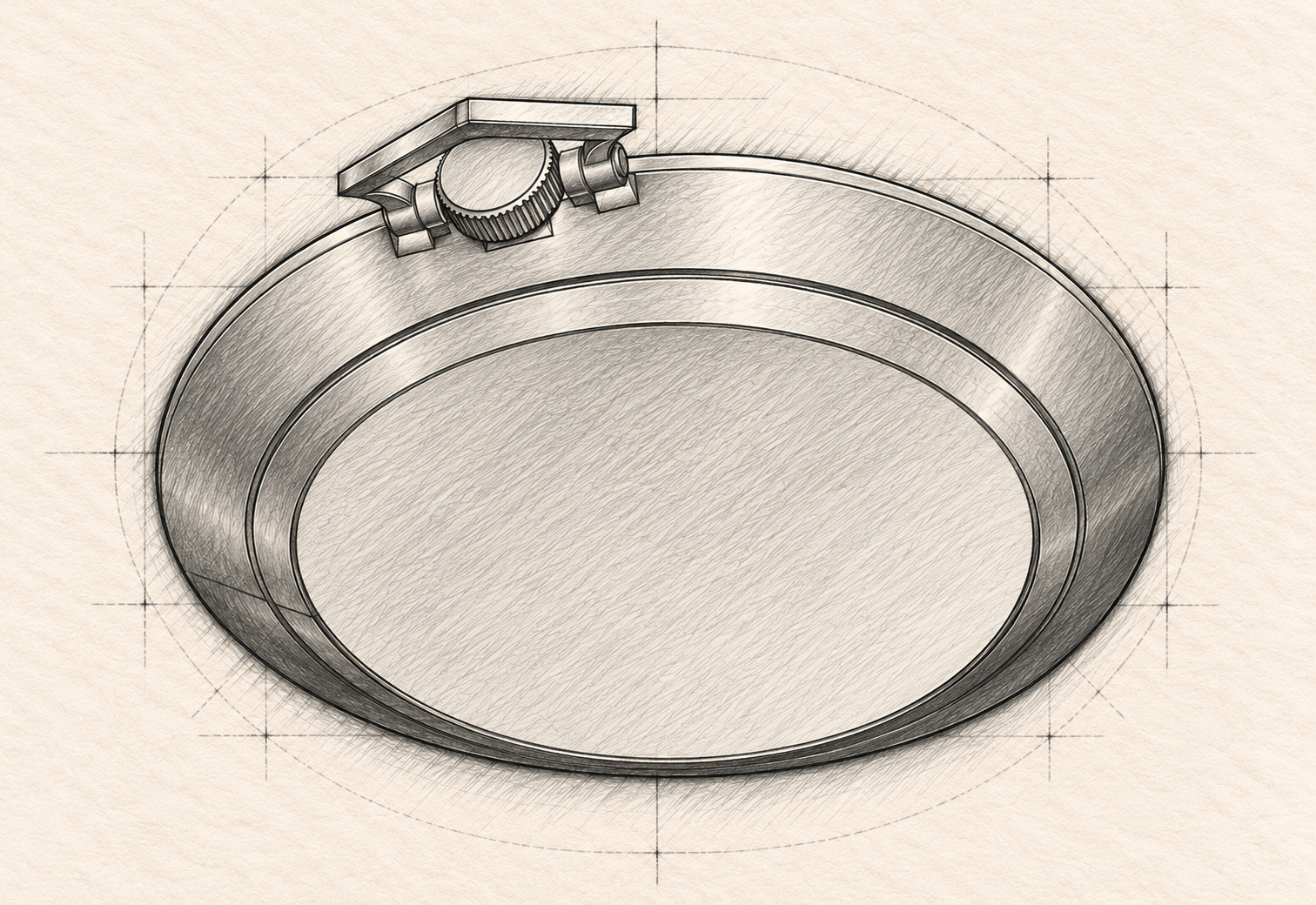
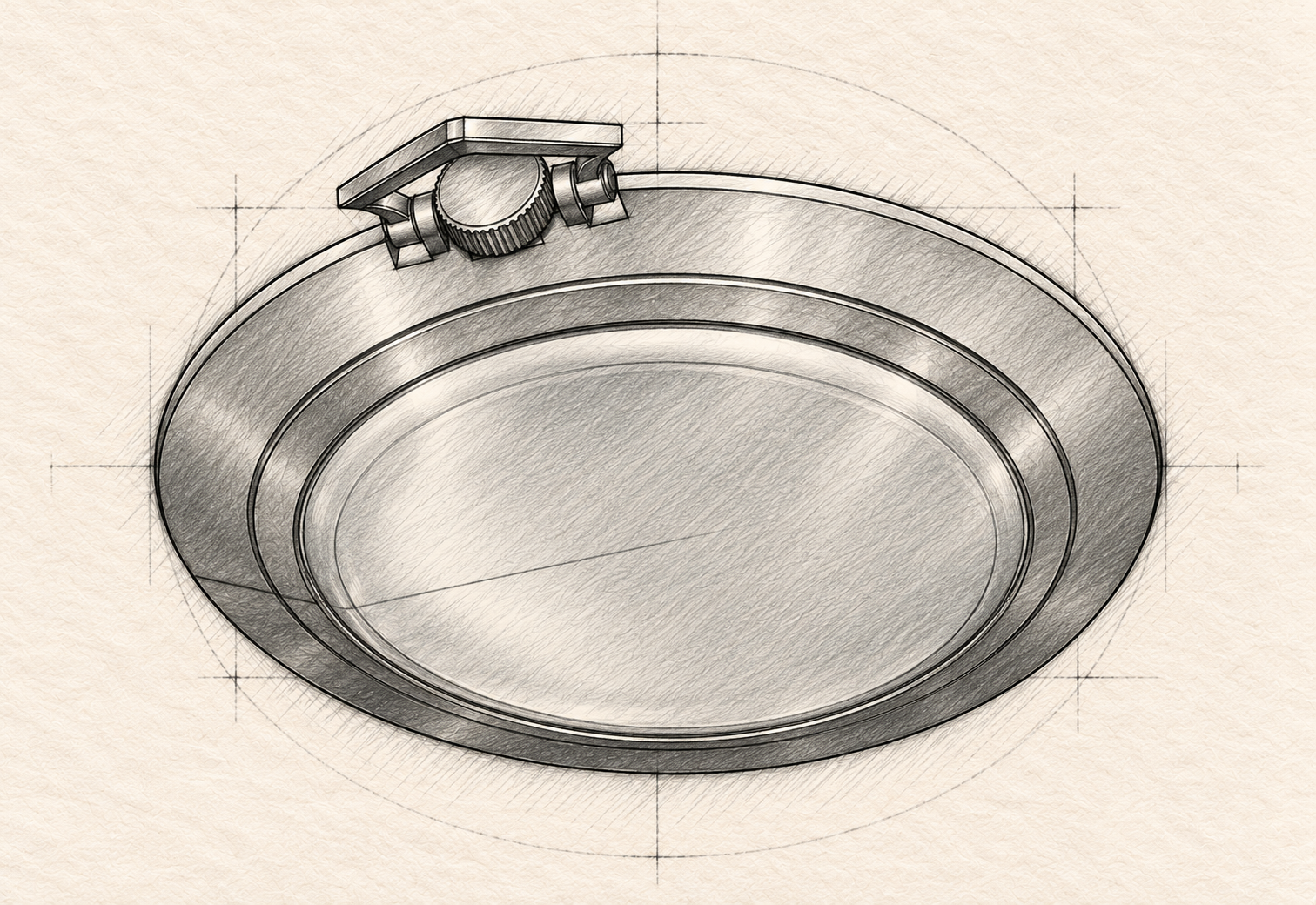
The earlier flat crystal carried its height all the way out to the metal surround. V011 lowered the front metal by 1.15 mm, flattened the front slopes and introduced a broad, shallow dome with a rounded edge. This preserved the central space for the hands while giving the case a lower profile.
At this checkpoint the case diameter was 53 mm, the metal envelope 7.05 mm and the total height at the crystal apex 8.20 mm. These are dimensions of the V011 study. Its provisional hand sweeps helped establish the package; later dial and hand revisions required their own clearance checks.
A continuous transition into the bow.
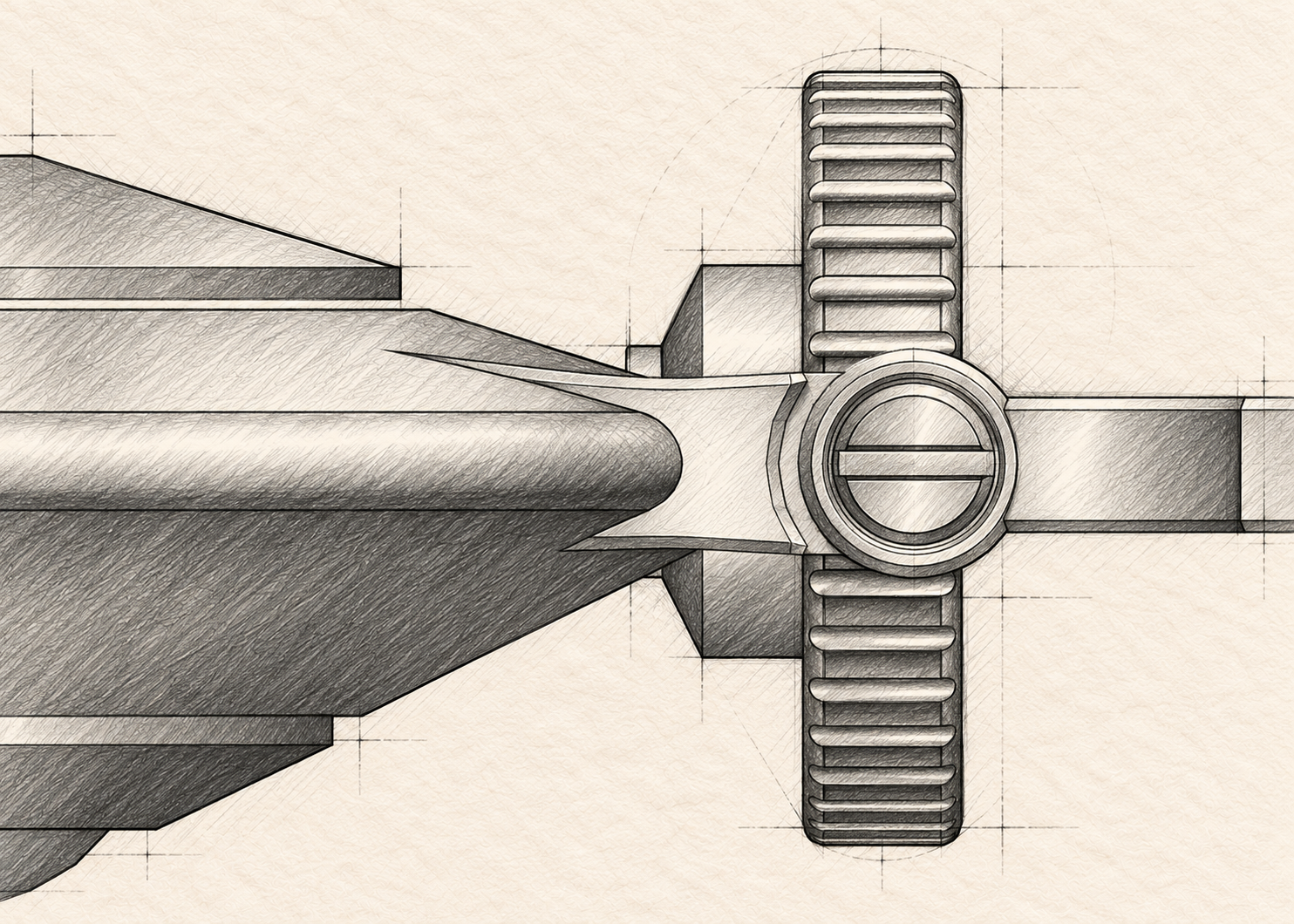
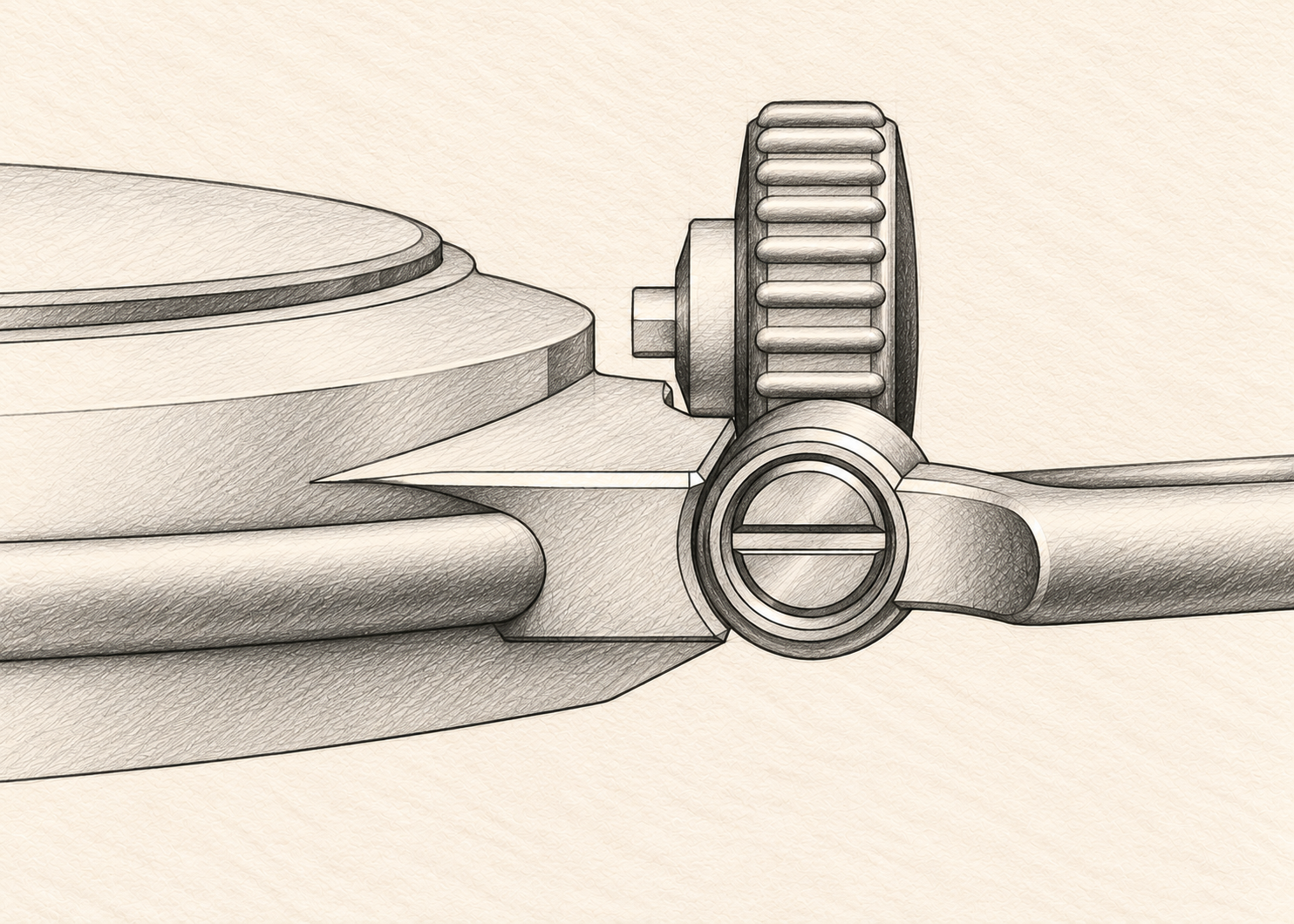
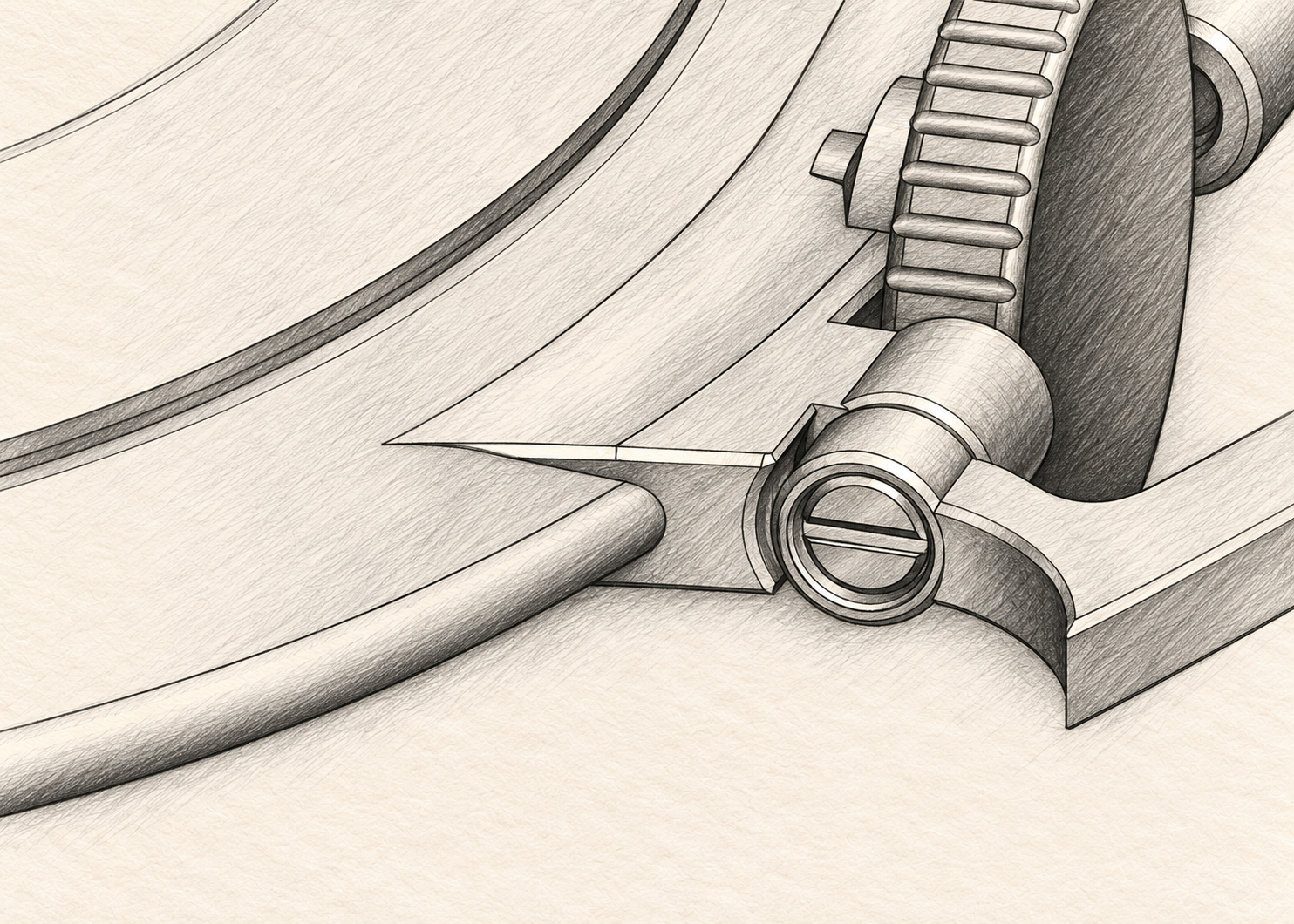
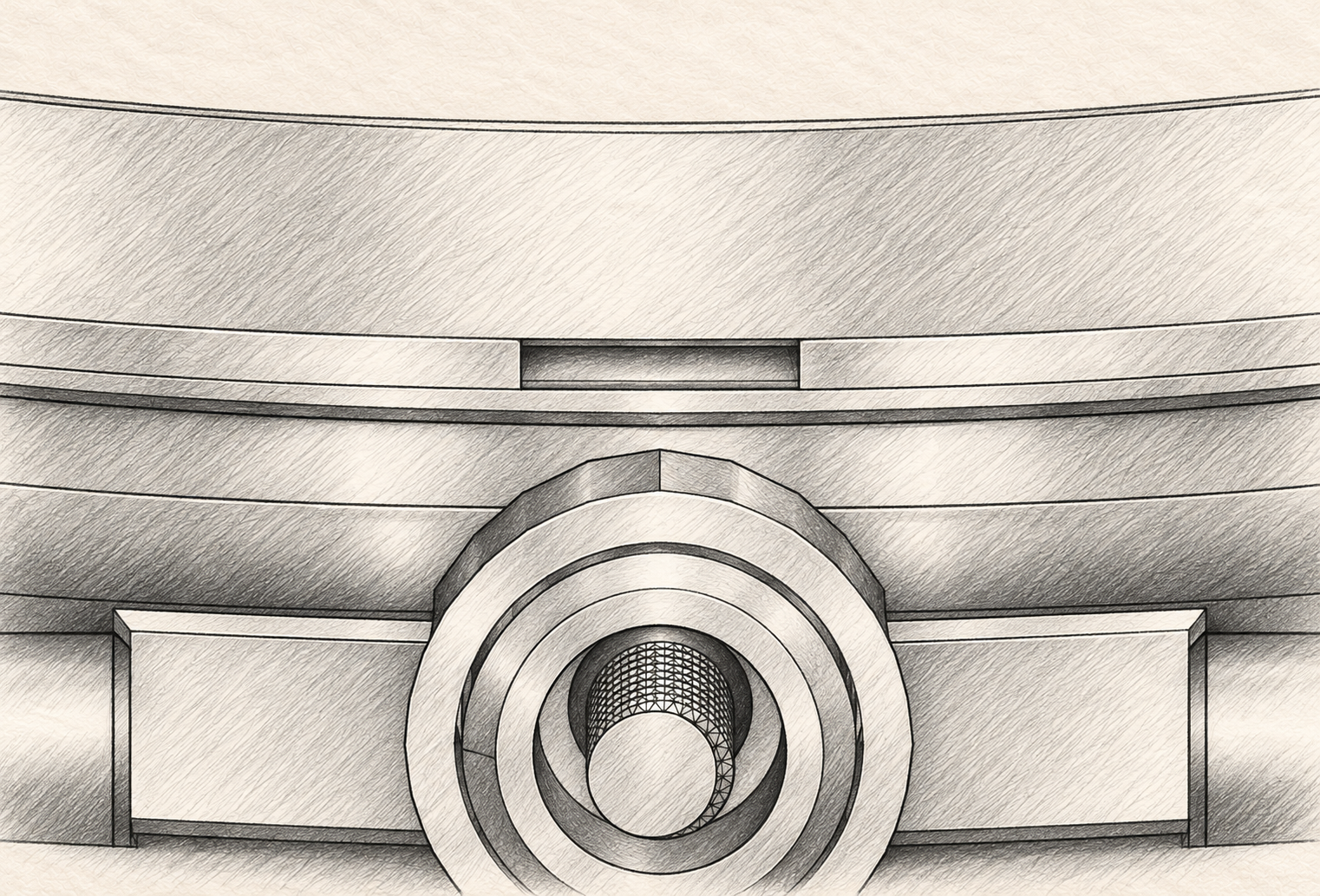
The bow mounts were refined alongside the slim recessed crown. An earlier mount dipped inward and rose again, creating a pinched waist. V028 replaced that reversal with a transition that follows the case slope and gradually levels out beside the pivot screw.
The front and rear transitions start from their respective case slopes. The study checked the bow through 181 sampled positions from −90° to +90° and the crown through 72 rotational positions. Those digital checks guided the shape; strength and finished operating fits still need physical testing.
Bring the opening to the crown.
The back-opening detail was brought onto the crown centreline. The recess was confined to the lid, restoring the surrounding middle-case surface. Open-position studies recorded how the lid and hinge move together.
A concealed-hinge investigation was also considered during development and subsequently abandoned. The retained design continued with the smaller exposed-hinge direction. The images here record the V030 opening study, rather than the final hinge construction.
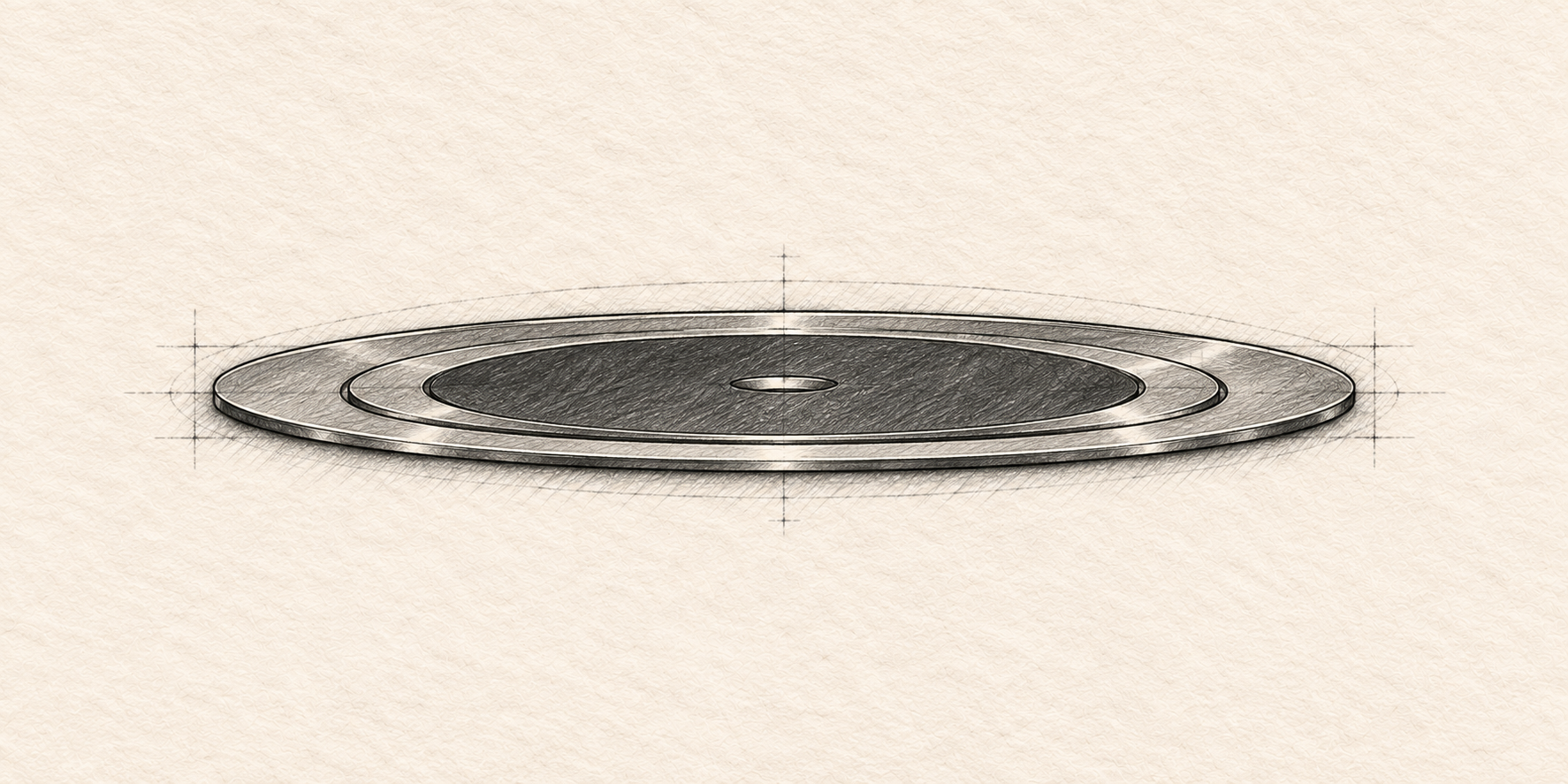
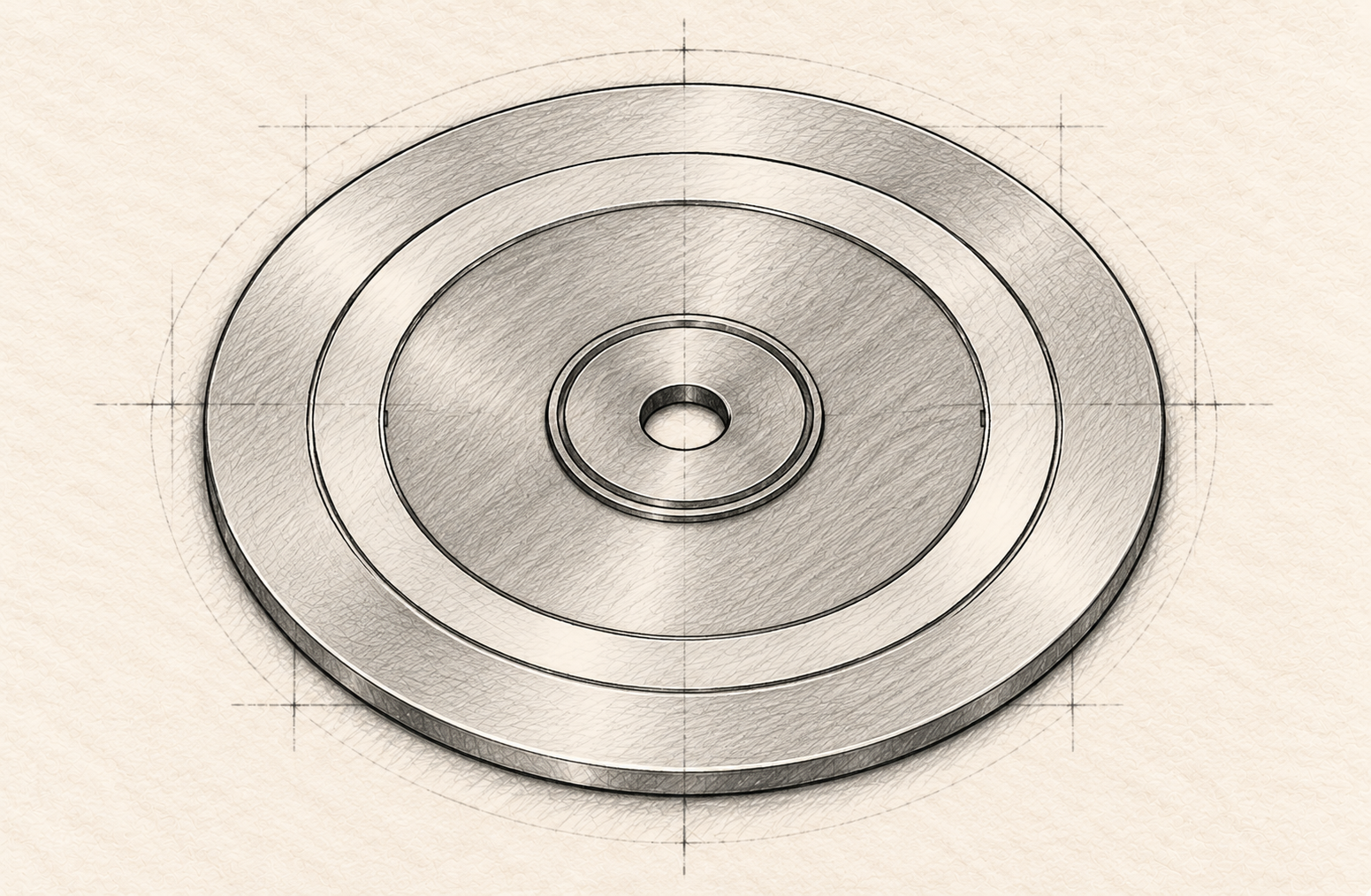
A removable enamel map.
The central map was developed as a separate enamel envelope over a metal base, with a push-on boss beneath it and concealed reliefs for removal. The reliefs let a tool engage the metal rather than the enamel. The city face was brought level with the map, with the 24-hour display recessed 0.20 mm below them.
The V044 study used a 0.45 mm central face: a 0.30 mm metal base and a nominal 0.15 mm enamel envelope. That enamel thickness is a design allowance for discussion with the dial maker. The fired stack, attachment fit and removal force remain to be established. V045 brought the dial into the complete case-and-movement assembly.
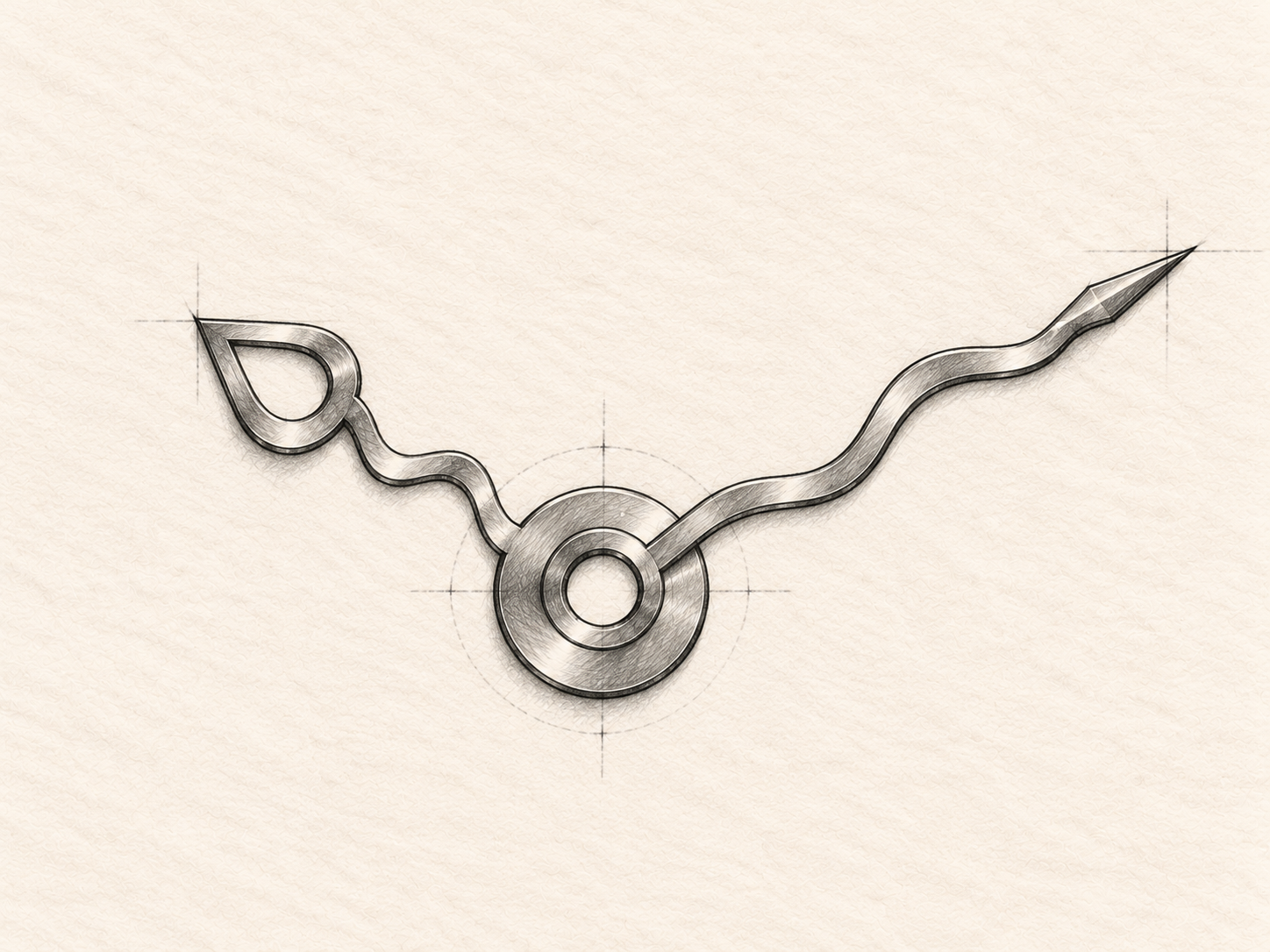
Two directions for the hands.
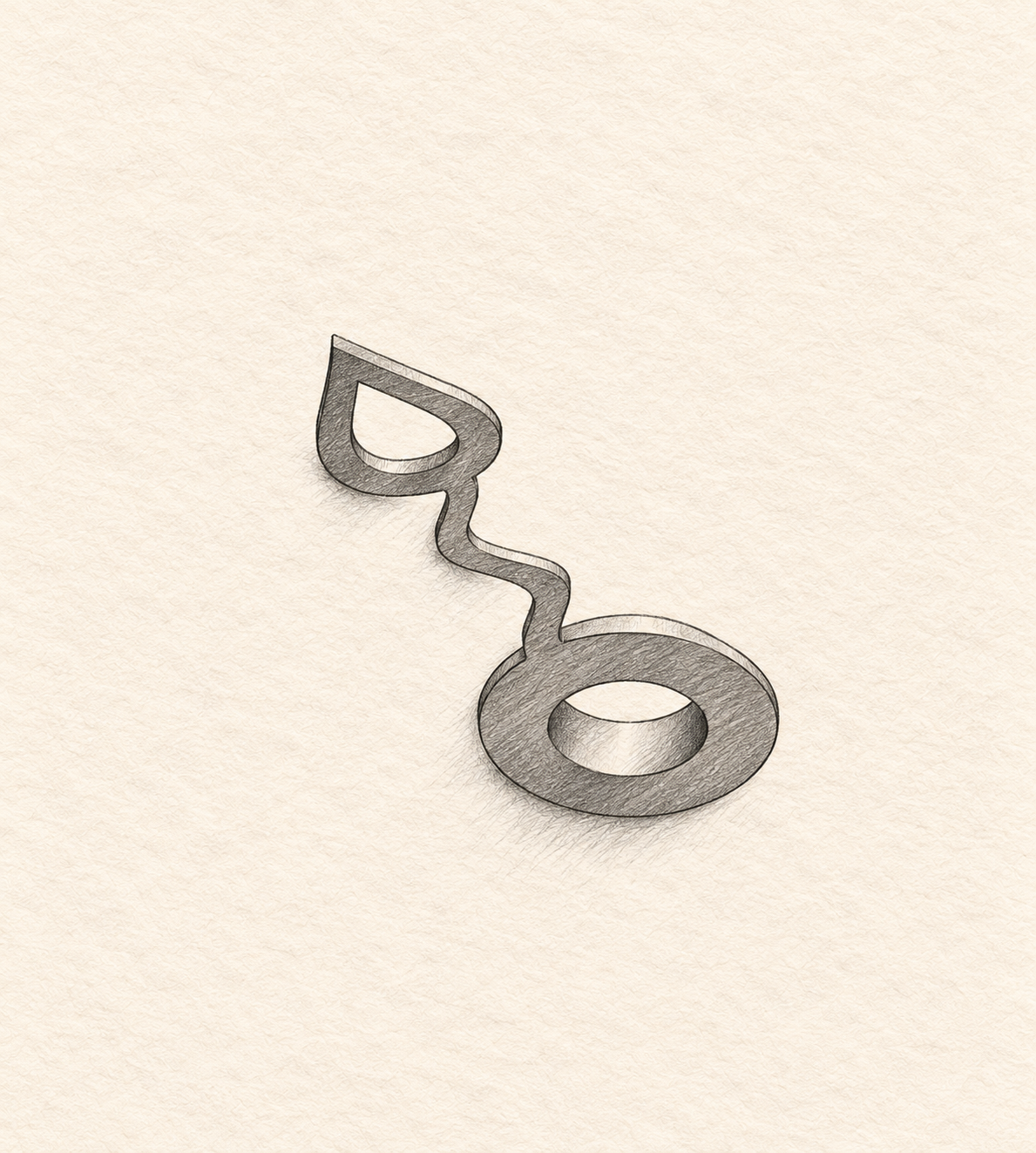
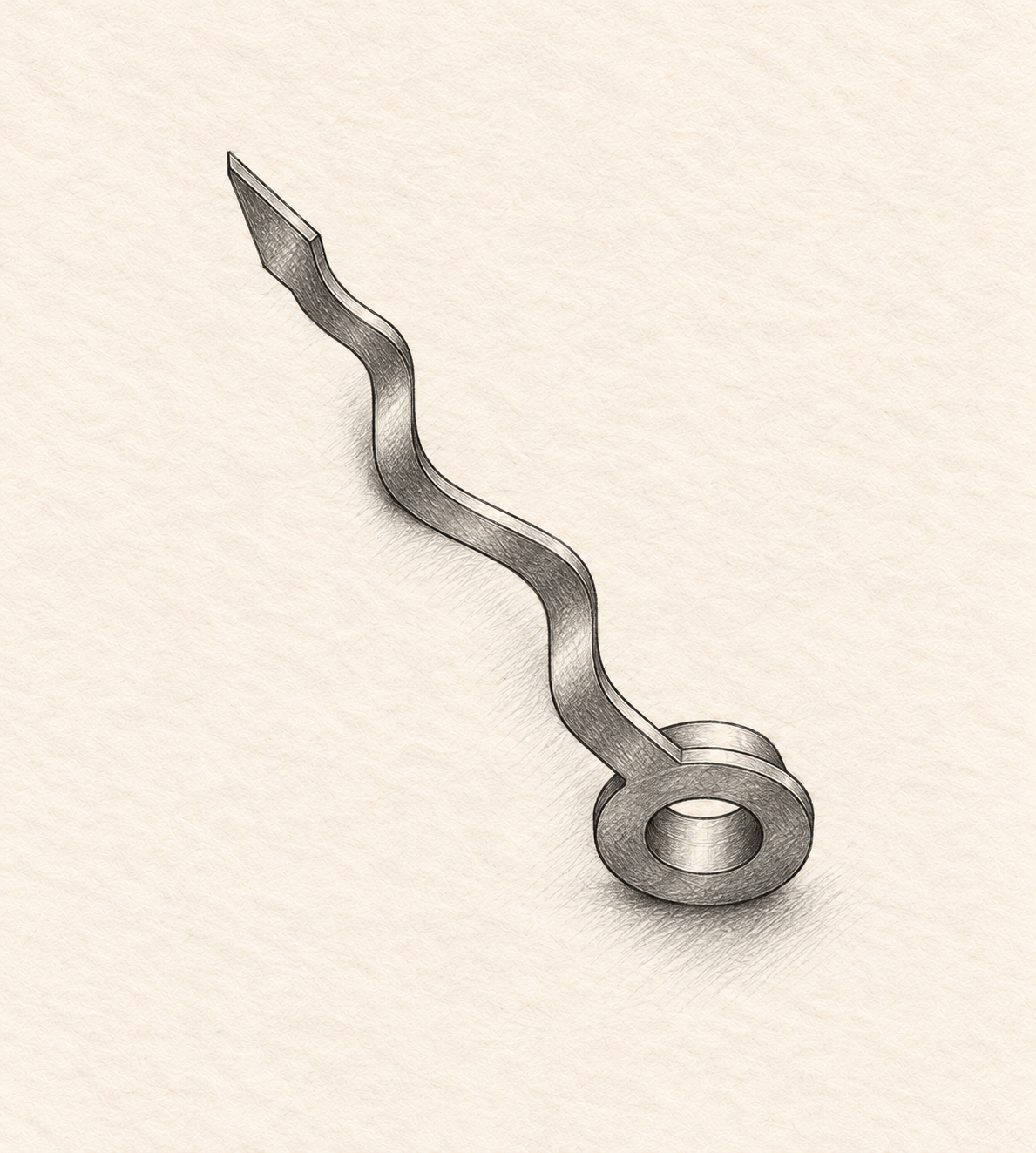
I explored different hand designs for the same pocket watch. The earlier V051 study uses serpentine curves, with an open teardrop on the hour hand and a pointed minute hand.
The V058 openwork study offers another direction: a symmetric hour hand with a teardrop tip and a tapered minute hand with three leaf-shaped openings. The illustrated V056 watch brings that hand design into the complete concept. These studies show possible configurations as the design develops.
In the V051 study, the hour blade was 0.216 mm thick and the minute blade 0.18 mm. The V058 contour study records an 8.20 mm hour-hand reach and an 11.40 mm minute-hand reach. Final fits, clearances and strength remain to be established.
Let the ring pass beneath its neighbours.
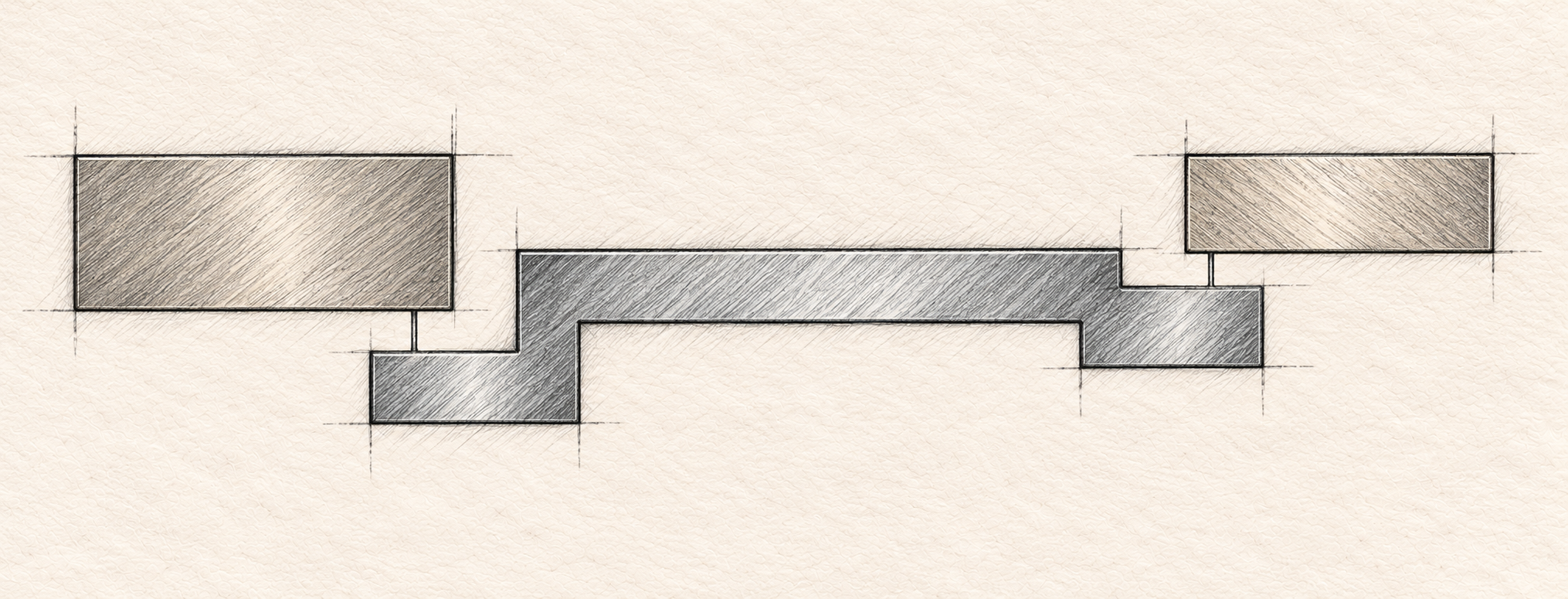
Tighter dial seams led to the latest overlapping-ring construction. Instead of closing the gaps by letting the parts touch, the recessed 24-hour ring extends underneath the central dial and the city disc. This conceals the radial slots in a straight-on view while retaining separate parts.
The inner and outer extensions sit at different heights because the adjacent discs have different underside levels. Both use a nominal 0.10 mm axial gap. V054 retained the visible dial heights, artwork and the V051 hands at that stage. Runout, finishing allowances and actual assembly still need to be tested.
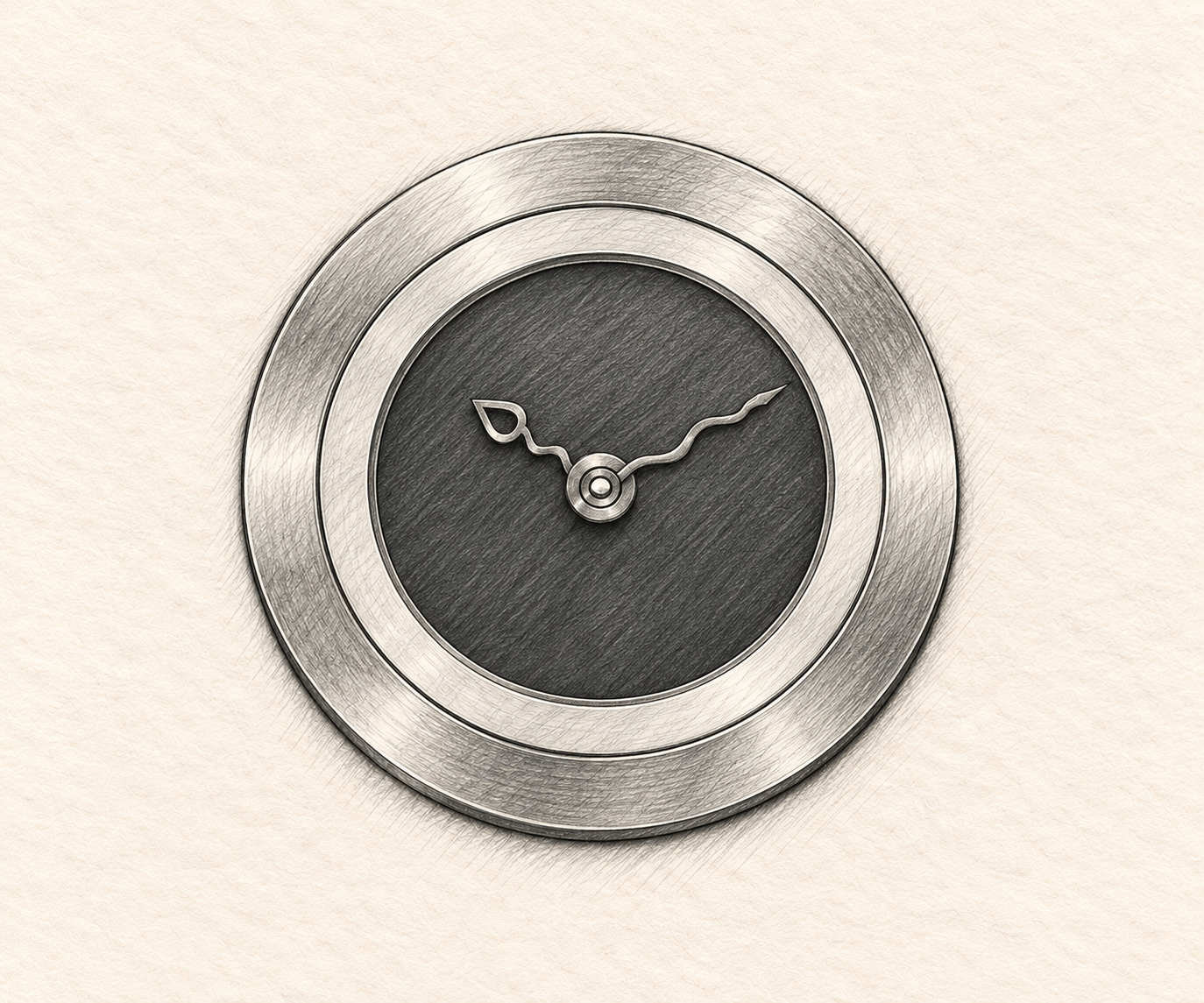
I have also explored the complete watch with different hand configurations. The earlier V054 view and the V056 openwork version show two directions for the same concept.


A concept
ready to develop.
The V056 concept brings together the case, movement, world-time dial, openwork hands and domed crystal. I have integrated the hand design for visual review; the overall design remains a work in progress. Final fits, tolerances, finishing, assembly and physical function still need to be tested before manufacture.